
I don’t know about you, but I’ve got a sourdough starter going and it seems like I’m always ending up with extra sourdough discard. Don’t get me wrong, I’m okay with sourdough bread, but it is so time-consuming! And since I don’t like the idea of wasting sourdough discard, I had to figure out how to utilize it. I found the perfect solution–turn it into the fluffiest sourdough focaccia bread you’ve ever tasted. This recipe takes your discard to a whole new level of delicious. I’m talking next-level focaccia that’s so good, you’ll be finding ways to make extra discard just so you can bake up another batch.
With just a few simple ingredients like bread flour, whole flour, yeast, olive oil, and sea salt, you can take your sourdough discard and give it new life with this sourdough focaccia recipe. So don’t dump that discard–get creative with it! This sourdough focaccia bread is so easy, even a novice baker can nail it. I’ll walk you through stretching and folding for that tender interior crumb and share my best tips for working with sourdough. Let’s level up that discard and make some magic!

But first, let’s talk about sourdough starters
Ugh, sourdough starters—am I right? On the one hand, I feel like an artisanal baker every time I feed the little yeasty beast. It makes me feel like I should be wearing a beret and have a baguette tucked under my arm. On the other, it’s kind of annoying to have this living thing that constantly needs feeding and attention, until I die or until it dies — whichever comes first. I constantly feel both accomplished and stressed out at the same time.
So why is it so high maintenance? Sourdough starters are alive and active, so to keep them that way, you have to feed them regularly by discarding a portion of the starter and replacing it with fresh flour and water. I don’t like wasting ingredients and food, so I’ve had to find ways to use the discard in recipes like this focaccia. Talk about a labor of love-hate. My starter and I may have a complicated relationship, but for that first bite of this sourdough focaccia bread, I’m willing to forgive it. Anyone else feel me on this? The struggle is real, but so is the reward!
Tips and tricks for working with sourdough
Working with sourdough discard and starter does require some patience. Here are a few tips I’ve picked up along the way.
- Be flexible with proofing times. The proofing times I’ve suggested are just estimates. Every kitchen is different, so keep an eye on your dough. If it’s rising faster than expected, shorten the next proofing time. If it’s taking longer, extend it. The key is not to over-proof the dough, or it can get gummy.
- A warm place is best. Sourdough needs warmth to help the yeast do its thing. That’s why I recommend proofing in an turned-off oven with the light on. If your kitchen runs cool, you may need additional warmth. Consider placing the dough on a heating pad set to low, or in a proofing box. The ideal temperature for most sourdough activity is 70 to 78 F.
If you’re new to sourdough, don’t worry – the discard adds flavor but the commercial yeast does most of the heavy lifting here. And if you don’t have a starter yet, you can make your own or purchase some online. I personally just used Joshua Weissman’s sourdough starter recipe.
Making the most delicious sourdough focaccia bread
To start, combine the water, yeast, sugar and sourdough discard in a large mixing bowl. Water temp should be about 85-90 degrees Fahrenheit in normal weather, or 95-105 degrees Fahrenheit in colder weather. Mine was around 100 since I live in Idaho and I made this in the winter. Let it sit until slightly bubbly, about 10-15 minutes. Then mix in the flours and salt. Knead the olive oil into the dough until fully absorbed. Cover and rest for 15 minutes.
Next, stretch and fold the dough. This develops the gluten, giving you that signature chewy texture. Repeat twice more, resting 15 minutes between. After the last stretch, rest for 30 minutes. While the dough rests, line a 9 by 13 in. baking dish with parchment and olive oil. Spread the dough in the pan and let proof for another 25-30 minutes. Then, dimple it with your fingers and top with more olive oil and sprinkle with some flaky sea salt.
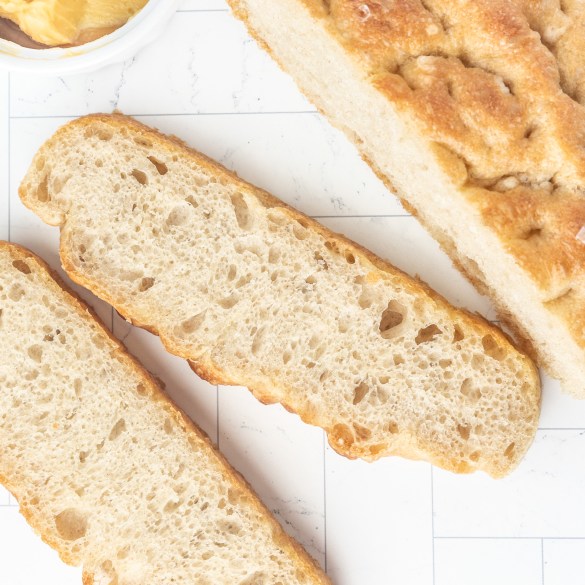
Finally, bake until golden brown, about 30 minutes. Let cool, then slice and enjoy! This focaccia is delicious on its own, or served as a side to soups and salads.
Different ways to eat this focaccia bread
I really like how versatile focaccia bread is. For me and my husband, our favorite way so far of eating this is for breakfast. I’ll toast a slice cut in half horizontally and top it with avocado that’s been smashed with hard-boiled eggs, a bit of salt and lemon juice, and topped with a sprinkle of smoked paprika. Nothing beats a morning pick-me-up like that! For lunch, focaccia makes an amazing sandwich base. Pile it high with roasted veggies, goat cheese, and pesto for a satisfying vegan option.
If you want to turn your focaccia into pizza, just top it with your favorite sauce and cheese before baking and continue baking until the cheese is melted. You can also add other toppings like pepperoni, basil, or sun-dried tomatoes. Bake the pizza version a few minutes longer, around 10-15 minutes total. Then broil for about 5 minutes so the cheese gets all toasty.
Honestly though, I’ve eaten most of our batch of focaccia bread toasted with some Kerrygold butter. So simple, yet so satisfying and delicious.
Tools you’ll need


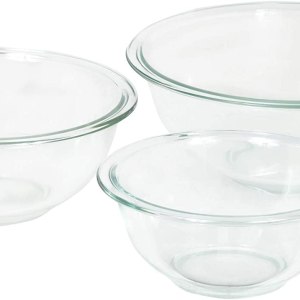



Ingredients
- 226 g water*
- 7 g active dry yeast (1 packet, typically)
- 10 g sugar
- 85 g sourdough discard
- 265 g bread flour
- 50 g whole wheat flour
- 8 g salt
- 28 g olive oil (+ 28 g more for the pan and top of the dough before baking)
Instructions
-
To start, combine the water, yeast, sugar and sourdough discard in a large mixing bowl. Let it sit until bubbly, about 10-15 minutes.
-
Then mix in both flours and salt until there are no more dry spots. Knead the olive oil into the dough until fully absorbed. Cover and rest for 15 minutes in a turned-off oven with the oven light on.
-
Next, stretch and fold the dough. To do this, wet your hands and grab one side of the dough. Gently stretch it up and over, folding it onto itself. Give the dough a quarter turn and repeat, stretching and folding until you’ve made it all the way around. Cover and rest again for 15 minutes. Repeat the stretch and fold two more times, resting the dough for 15 minutes in between (so a total of three stretch and folds, across a total of 45 minutes). After the third and last stretch and fold, cover and proof for 30 minutes. While the dough rests, line a 9 by 13 in. baking dish with parchment and coat it with half of the leftover olive oil in and spread all over.
-
After your dough has proofed for 30 mins, preheat the oven 425 degrees F. Meanwhile, put your proofed dough in the greased baking dish, cover and let proof for another 25-30 minutes.
-
After the last proof, add the rest of the leftover olive oil on top of the dough, and dimple it with oiled fingers. Sprinkle the top with some flaky sea salt.
-
Bake for 27-32 minutes, until the top is golden brown. Mine took about 31 minutes. If you like your focaccia to be crispier on the top and bottom, bake it for a bit longer, maybe another 3-5 minutes. Remove from the dish and rest on a cooling rack for 10-15 minutes before slicing. Enjoy!
Notes
*Water temp should be about 85-90 degrees Fahrenheit in normal weather, or 95-105 degrees Fahrenheit in colder weather. Mine was around 100 since I live in Idaho and I made this in the winter.
Frequently Asked Questions (FAQs)
Why use sourdough discard?
Sourdough discard adds tangy flavor to bread. I had always have plenty of leftover from feeding my starter, so why not use it? Sourdough discard is alive and active, adding lift and airiness. It gives focaccia added flavor and fluffiness. Plus, it reduces waste. Win-win!
Why proof and rest the dough?
Proofing and resting the dough allow the sourdough discard and yeast to do their thing. As the yeast feeds on the flour, it releases carbon dioxide gas that gets trapped in the dough, causing it to rise. The longer the dough rests, the more it will rise and the lighter and fluffier your focaccia will be.
Do I really need the extra yeast?
The yeast helps the sourdough discard get the party started. My sourdough discard is a bit sleepy since it’s been in the fridge, so the yeast provides an extra boost of leavening power. You could omit the yeast, but the focaccia may take longer to rise and end up denser. I like to hedge my bets and throw in a packet of yeast.
Why do you have to stretch and fold?
Stretching and folding the dough is key to developing its structure. This helps create layers in the dough that will make your focaccia light and airy. With each stretch, the dough will become more elastic. If at any point the dough starts to resist stretching, just cover it and let it rest longer before continuing. Stretching and folding helps the yeast distribute evenly and builds structure. Don’t skip this step, or your focaccia won’t have that signature springy, bubbly texture!
What’s the difference between resting and proofing?
I kinda use proofing and resting a bit interchangeably in this recipe, but they serve different purposes. Regular resting simply means leaving the dough alone for a period of time. I rest the dough in between stretch and folds so the gluten can relax, making it easier to work with. Proofing, aka fermenting or letting the dough rise in a warm place , is one of the most important steps in making focaccia or any yeast-leavened bread. After kneading and stretching the dough, the yeast needs time to feed on the carbohydrates from the sugar and flour, releasing air bubbles that make the dough rise.
Why bread flour and whole wheat flour? Can’t I use all-purpose flour?
Bread flour has a high gluten and protein content, which gives focaccia its signature chewy yet airy texture. The whole wheat flour adds a nutty, earthy flavor and a touch of healthy fiber. Using a combination of flours results in a more complex flavor and balanced texture. You could use all-purpose flour in place of the bread flour, but the focaccia might not have quite the same light and springy crumb.
The good thing with this focaccia recipe though is that it is very forgiving. There was one time when I didn’t realize I didn’t have enough bread flour in the pantry, so I actually had to use half the normal amount of bread flour and replace the remainder with regular (unbleached) all-purpose flour. The crumb wasn’t as open, but the sourdough discard still helped make it fluffy enough. It turned out just as delicious!
How long can this sourdough focaccia bread last?
If you live in my household, not long, haha. Focaccia is best eaten within 2 to 3 days. Keep it in a Ziploc bag at room temperature. The olive oil in the dough and coating the top helps keep it from drying out, but it’s still best enjoyed fresh. You can also freeze focaccia for up to 3 months. When ready to eat, thaw at room temperature, then reheat in a 300 F oven until warmed through.
// ON THE SCENE
- Bottom backdrop: Replica Surfaces — Herringbone Marble