

Japan has become one of those places I know I’ll keep coming back to, so I thought I’d take stab at creating my own Japan guide.
Our first trip in 2024 was short (only five days in Tokyo!), but it was enough to make us fall completely in love with the country. This year, my husband and I finally got to go back for a longer 10-day trip, giving us more time to explore beyond Tokyo and visit Kyoto, Osaka, plus a quick day trip to Hiroshima.
The trip was originally planned as a birthday and wedding anniversary celebration. We booked it almost a full year in advance, thinking it would be a fun “treat ourselves” kind of trip. Then, in late January 2026, we found out we were expecting, so suddenly, this also became our babymoon. Very on-brand for life, honestly.
I want to be upfront: this Japan guide is based on two personal trips: one in 2024 and one in 2026. I am not a Japan expert. I didn’t grow up there, I don’t speak Japanese, and there are entire swaths of these cities I still haven’t explored.
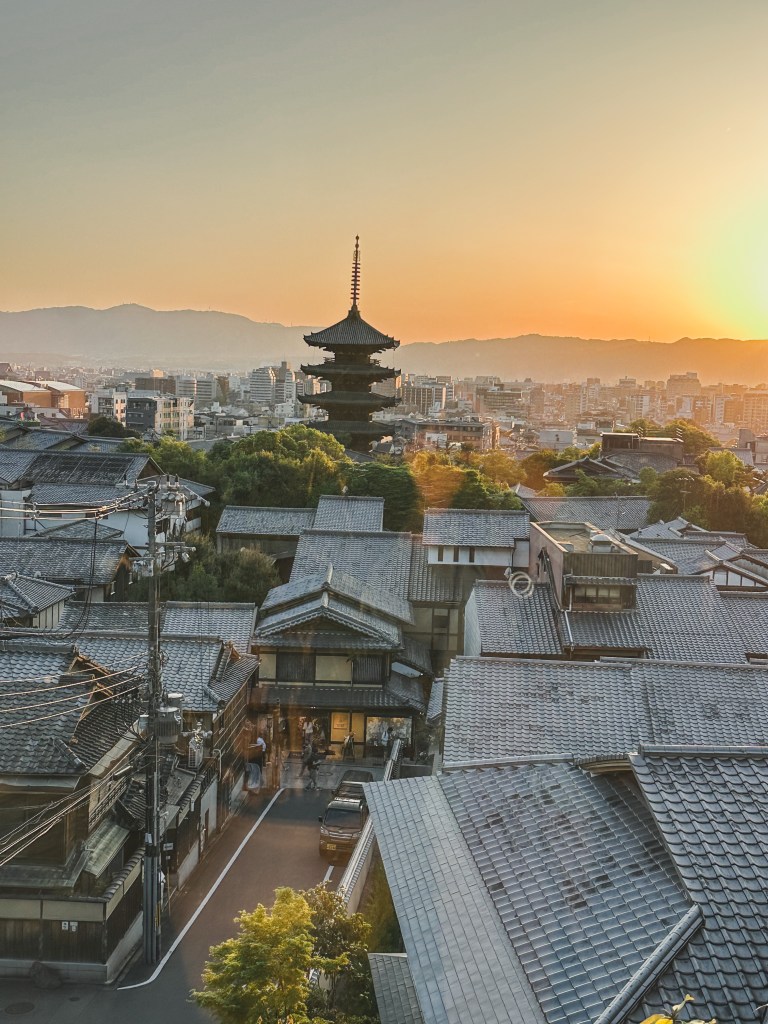
What I can offer is an honest, firsthand perspective on the things we actually did: what felt worth it, what didn’t, what surprised us, and what I wish I had known before going. So take what’s useful, skip what doesn’t apply, and supplement with your own research for the things I haven’t covered.
Also worth noting: I was sick for about 90% of our 2026 trip. So if I can still call it one of the best trips of my life, that probably tells you something about Japan.
A QUICK NOTE ON FRAMING: Throughout the guide, when I say “we recommend,” I mean “this worked for me and my husband.” Take it like advice from a friend who’s been twice, not a guidebook. Your mileage will vary especially if you have kids, are traveling solo, or are visiting in a different season (we went both times in early-to-mid April, peak shoulder/cherry-blossom season).
✈️ Getting to Japan
- If flight prices are similar, choose Haneda Airport over Narita. Haneda is significantly closer to Tokyo proper (~20 min) versus Narita (~1 hour). The difference in transit time and cost on arrival day adds up.
- Budget an extra 2.5–3 hours at the airport after landing. Immigration, customs, and transit ticket lines can run long, especially navigating an unfamiliar airport with occasionally confusing signage. Don’t plan anything tight on arrival day.
🛏️ Lodging
- Skip Airbnb unless you speak Japanese. Hotels are often cheaper, nicer, larger, and easier to deal with.
- Quiet sleeper? Avoid Shinjuku and Shibuya neighborhoods at night. The trade-off is being slightly farther from the nightlife if you want it.
- Going to Tokyo Disney? Book a hotel near the resort for at least one night — the commute eats your day otherwise.
Hyatt Globalist hack: If you’re staying at a Hyatt, you can buy a “Guest of Honor” certificate from eBay (or get lucky and have someone gift you one!) that gives you Globalist perks (free breakfast, room upgrade subject to availability) for one stay. At the Park Hyatts in Tokyo and Kyoto, the breakfast alone (~$45–$50 pp/day) more than paid for the cert across two mornings.
🗺️ Planning Your Days
- Book at least one customizable guided tour in each city you visit — especially if it’s your first time there. The cognitive load of figuring out which highlights to prioritize in each city is real, and a good guide takes that off your plate while also optimizing your route. In Tokyo, my 2024 tour covered Meiji Shrine, Harajuku, Shibuya Crossing, and Shinjuku in a single day. That freed up the rest of my Tokyo days to do whatever I actually wanted without pressure. The same logic applies to Kyoto, Osaka, or wherever you end up. Look for tours that let you customize your stops.
- Map your interests on Google Maps before you go. Save everything you’re interested in, then look at how the pins cluster geographically. Group nearby things on the same day. This is the single most practical planning move I made, and it will save you from a lot of wasted transit time.
- Plan your trip by minimum recommended days per city. For Tokyo, I’d say 5 days minimum and even that feels tight. For Kyoto, 3–4 days. Osaka, 2–3 days. These are minimums — you’ll want more if your schedule allows.
- Spring (late March–April) is cherry blossom season and one of the most beautiful times to visit — but also the most crowded. Book hotels and popular restaurants months in advance if you’re going during this window.
🚇 Getting Around Japan
IC Cards (Suica / Pasmo) — Get One Immediately
The first thing you should do after arriving is get a Suica or Pasmo IC card. These are rechargeable cards that work on JR trains, subways, and buses across Japan so you don’t have to buy separate tickets every time you travel. But the cool thing is IC cards also work at convenience stores (7-Eleven, FamilyMart, Lawson) and many other shops. Load it up and you can use it like a debit card throughout your trip.
💡 How to Set It Up: Available at most major train stations and airports. Load ¥2,000 to start and top off as needed. iPhone users: you can add Suica directly to Apple Wallet without needing a physical card. Set it up before you leave home.
Shinkansen (Bullet Train) — JR Pass vs. Individual Tickets
The Shinkansen is how you get between cities, and it’s genuinely one of the great joys of traveling in Japan. Fast, smooth, reliable, and on time to the minute.
On the JR Pass question: do the math for your specific itinerary before assuming the pass is worth it. Prices for the JR Pass have increased significantly in recent years due to overtourism, and individual tickets bought through the smart EX app (Japan’s official Shinkansen booking app) can actually be cheaper if you’re taking fewer legs. For our 2026 trip, we took the Shinkansen 4 times: Tokyo → Kyoto, Kyoto → Osaka, Osaka → Hiroshima, and Hiroshima → Osaka. Even with Green Car reserved seats, individual tickets came out cheaper than the pass.
⚠️ JR Pass Important Notes: [1] The Nozomi and Mizuho (fastest) bullet trains are NOT covered by the standard JR Pass. If you have a pass, you’ll need to use the Hikari (Tokyo–Kyoto) or Sakura/Kodama (Osaka–Hiroshima) instead, which adds time. [2] If you’re buying individual tickets: the Nozomi is available via smart EX and is the fastest and typically the most convenient option. [3] Always reserve your seats in advance. Green Car (first class) seats are wider, quieter, and significantly more comfortable on longer legs. The price premium is worth it.
Within Cities
- Tokyo has one of the best train and subway networks in the world. Use it. Google Maps handles transit directions just fine.
- Kyoto’s transit network is less comprehensive. There are buses available if you want to save money, but Uber and taxis became our primary go-to for getting between sights aside from walking. If we were needing to walk more than 25 mins, we typically opted for an Uber.
- Osaka is somewhere in between. The subway is usable but you’ll still find yourself taking taxis for certain trips.
- Avoid taxis in Tokyo unless you need to. They’re expensive compared to the train. In Kyoto, they may be necessary depending on how much more walking you want to do.
🍣 Food & Dining
Use Tabelog (tabelog.com/en) to find restaurants. Think of it as Japan’s version of Yelp, except more reliable because Japanese reviewers are significantly more critical than the average Western reviewer.
- Lunch is almost always cheaper than dinner at the same restaurant. If you have a spot on your list that’s on the pricier side, going at lunch is a good way to get the quality without the dinner price tag.
- Don’t over-plan your meals. One of Japan’s genuinely amazing qualities is that you can walk into a random eatery off the street and almost always get something delicious and reasonably priced. Leave room for spontaneity.
- Convenience stores are great! The 7-Eleven egg salad sandwich is iconic for a reason. Onigiri, katsu sandwiches, hot foods, and pastries at konbinis are all genuinely good and affordable. Don’t skip this experience.
- Reservations matter. For popular spots, especially dinner on weekends, book in advance. Higher-end restaurants may require reservations weeks or even months ahead.
- Important: even when a restaurant lists a closing time, they often stop accepting new guests ~60 minutes before (or at least in Osaka). Don’t show up at 10 PM expecting to be seated at a place that “closes at 11.”
How to Read Tabelog Ratings
- 3.0–3.4 — Solid, reliable casual dining
- 3.5+ — Genuinely excellent. Prioritize these.
- 4.0+ — Often Michelin-quality. Reserve well in advance.
For reference: Sukiyabashi Jiro (of Jiro Dreams of Sushi fame) has a 3.85. So 3.5 is already really good.
💴 Money & Practical
- Japan is still very much a cash society outside major tourist areas. Withdraw a good amount early in your trip. 7-Eleven and Japan Post ATMs reliably accept foreign cards.
- Do not tip. It’s not customary in Japan and can actually cause confusion or discomfort. The service is exceptional almost everywhere — just enjoy it.
- Get an eSIM before you go. It’s cheaper than renting a pocket Wi-Fi and you’ll want to stay connected for navigation and Google Translate.
- Google Translate’s camera mode is invaluable for menus, signs, and packaging in Japanese.
- Japan has strong norms around public behavior. Keep your voice low on trains, don’t eat while walking (outside of designated food stall areas), and respect queue etiquette. Being mindful of this makes a real difference.
Tokyo
Tokyo is massive, endlessly layered, and genuinely easy to navigate thanks to one of the best public transit systems in the world. It rewards both the hyper-planner and the wanderer. I’ve been twice now and still feel like I’ve barely scratched the surface.
My 2024 trip was 6 nights (5 full days), and my 2026 trip was 3 nights as part of a longer itinerary. Both times, I felt like I could have used more time. That said, 5 days is a solid baseline for a first-time visitor, but just know you’ll still need to be selective.
Getting Around Tokyo
- Tokyo’s JR train and subway network covers everywhere you’ll want to go. Use your IC card (Suica/Pasmo) and let Google Maps handle directions. It’s genuinely one of the smoothest transit experiences in the world.
- Avoid taxis for most sightseeing because trains are faster and a fraction of the cost. Taxis are fine for late nights or short hops with luggage.
- Hotels in central areas give you the most convenient transit access. Quieter neighborhoods may require a few more transfers.
Where We’ve Stayed
HOTEL NIWA TOKYO — QUIET, COMFORTABLE, VALUE PICK
Stayed here in 2024 (~$170/night on a deal vs. usual ~$250). It’s in a quieter prefecture, so coming back from a busy day was restorative. Highlights: an excellent breakfast buffet (more options than the Park Hyatt’s, actually), a really good relaxation room with massage chairs (we liked them so much we bought a similar chair at home), and a rooftop with a vending machine and a view. Walkable to a station, but expect more train transfers to reach Shibuya/Shinjuku from here. Recommended if you want a calm base.
PARK HYATT TOKYO — ICONIC, PERKS-DRIVEN
Stayed here in 2026 on points (45k Hyatt points/night). With a $75 Guest of Honor certificate, which included breakfast for two (~$50 pp), the certificate paid for itself in 1.5 mornings. They upgraded our room as part of the GOH perks. Caveat on the breakfast: only one egg-dish entrée per person; the rest of the buffet is unlimited. The orange juice is genuinely incredible — trust me. Note: Hyatt’s points devaluation in May 2026 is likely to push the rate above 45k/night.
Restaurants + Food Spots
| Nabezo Shibuya Koendori | RECOMMEND |
| All-you-can-eat sukiyaki/shabu-shabu. Weekday lunch course is excellent value. Easily one of the best AYCE meals of either trip. | |
| Ginza Steak Honten | RECOMMEND |
| AYCE A5 wagyu. Great quality-to-price ratio; not the absolute best A5 you’ll ever have, but very solid for the format. | |
| Kura Sushi | RECOMMEND |
| Budget conveyor-belt sushi chain. Plates ~¥110–230. Great for a casual, fun meal with tap-screen ordering, dessert, ramen on the menu too. | |
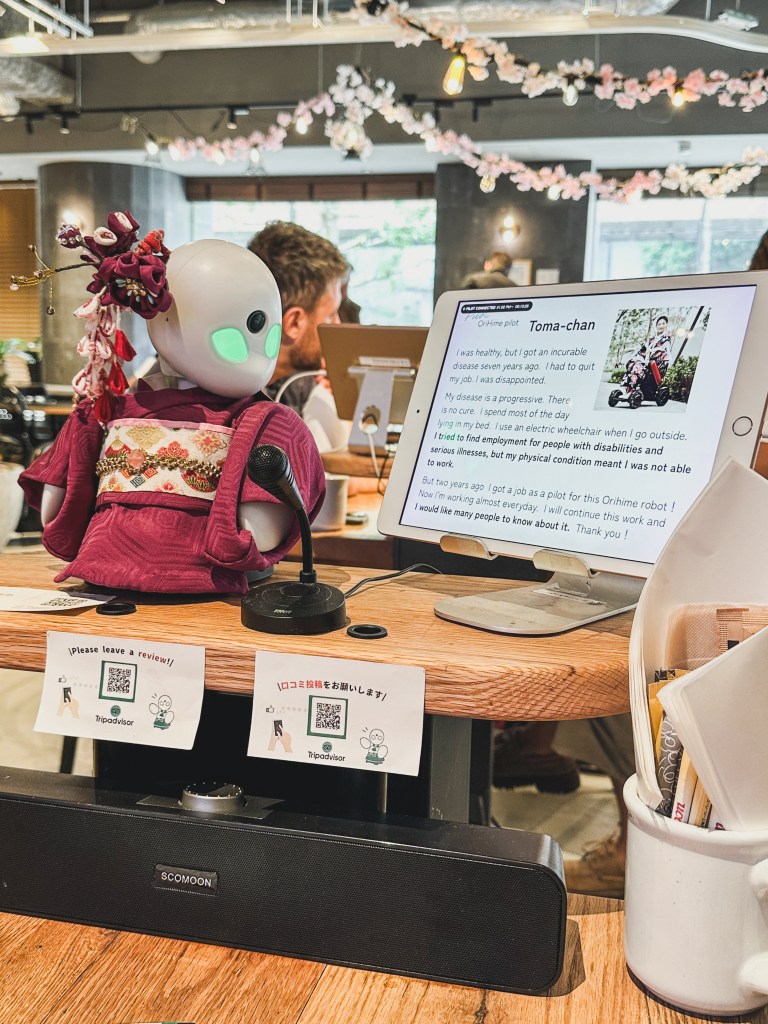
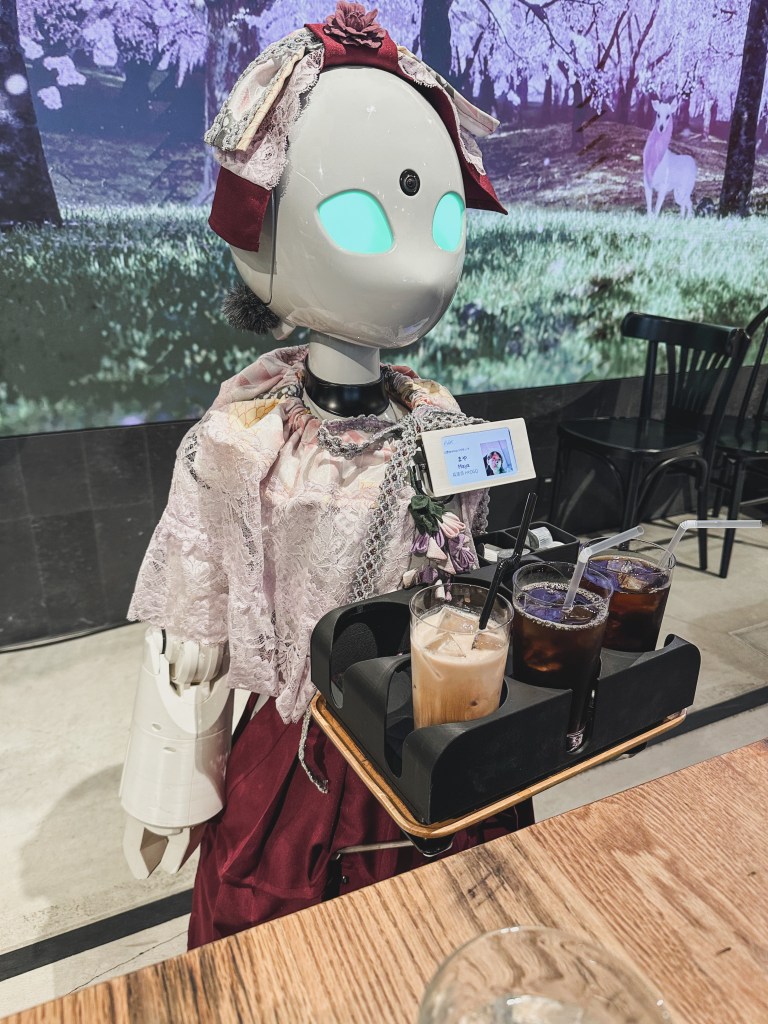
| DAWN Avatar Robot Cafe | WORTH VISITING |
| A great cause (the robot servers are operated remotely by people with disabilities who can’t easily work elsewhere). Food was better than expected. Reservations needed for table service; walk-ins fine for the cafe counter. | |
| Musashino Mori Diner | SKIPPABLE |
| Decent breakfast spot near Park Hyatt Tokyo (nice walk through the park). Their Japanese soufflé pancakes are good but you can find better elsewhere in Tokyo. | |
| Marion Crepes (Harajuku) | RECOMMEND |
| A cheap, fun street-food crepe stop. Worth a few hundred yen if you’re in Harajuku. | |
| Bananas Bistro (Filipino) | SKIPPABLE |
| I’m Filipino, live in Idaho with few Filipino restaurants nearby, and got curious from Instagram. Decent food, but skippable unless you have the same niche reason. | |
| Omoide Yokocho (“Memory Lane”) | SKIPPABLE |
| Famous narrow yakitori alley near Shinjuku. Hugely crowded; the alley is tight and most stalls have very little seating. The one yakitori place we tried (Echigoya) was meh. Probably some real gems hiding in there but it took more patience than we had. | |
| New York Bar & Grill (Park Hyatt Tokyo) | SKIP – DO NOT RECOMMEND |
| Slow service (notably worse than the rest of the hotel) and very mid food for a very high price. We’ve eaten at plenty of fine-dining places — this one isn’t worth it. | |
Places + Activities We Liked in Tokyo
Asakusa
The most traditionally atmospheric neighborhood in Tokyo and an essential stop for any first-timer. Anchored by Senso-ji Temple (Tokyo’s oldest), Nakamise Shopping Street runs from the famous Kaminarimon gate to the temple grounds and is lined with snacks, souvenirs, and traditional crafts. The backstreets are excellent for wandering.
- Go early (before 8:00 AM if possible) to see Senso-ji without the tourist crowds
- Pairs well with Ueno (Tokyo National Museum, Ueno Park) on the same day
- Kimono rental: We chose YAE, but there are plenty of options for a kimono + photoshoot experience
- Best for: first-timers, photographers, culture, traditional crafts


Samurai Ninja Museum Tokyo (Asakusa)
One of the most memorable hands-on cultural experiences I did in Tokyo. This is not a display-only museum; it’s interactive. The highlight: you actually get to cut with a real Japanese samurai sword. Whether you’re a history enthusiast or just want to do something genuinely unique, it belongs on your Asakusa day.
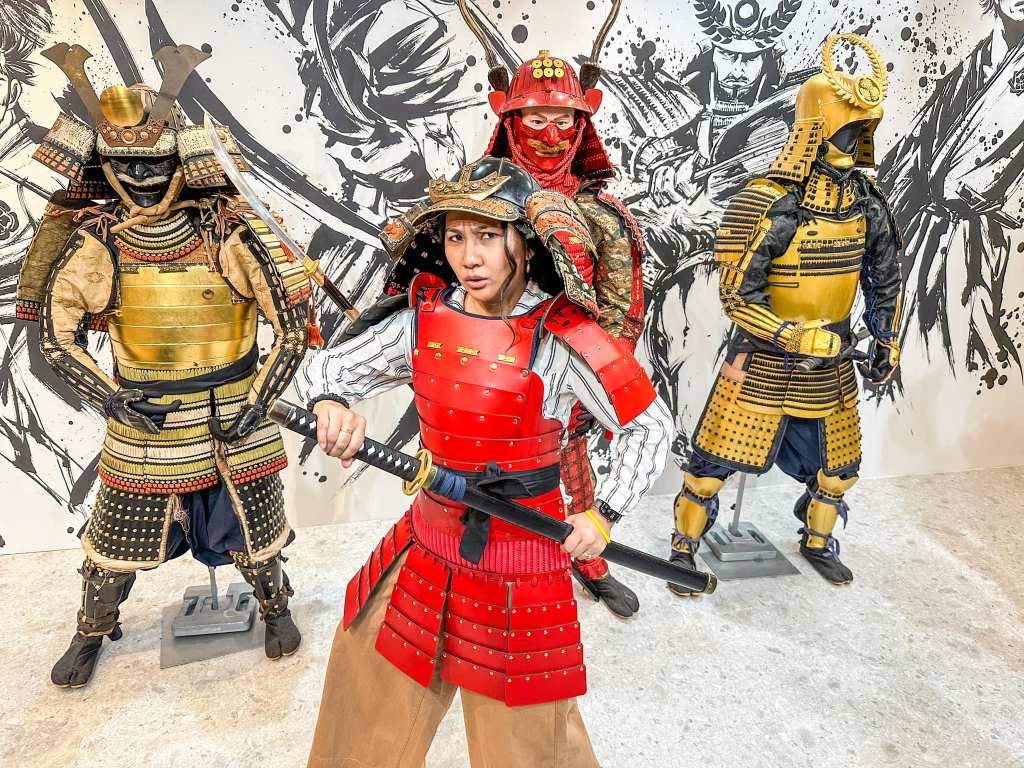
💡 Plan Accordingly. This pairs naturally with Senso-ji and Nakamise on the same day. If you’re also doing kimono rental, be mindful that both activities take time — don’t overload the day.
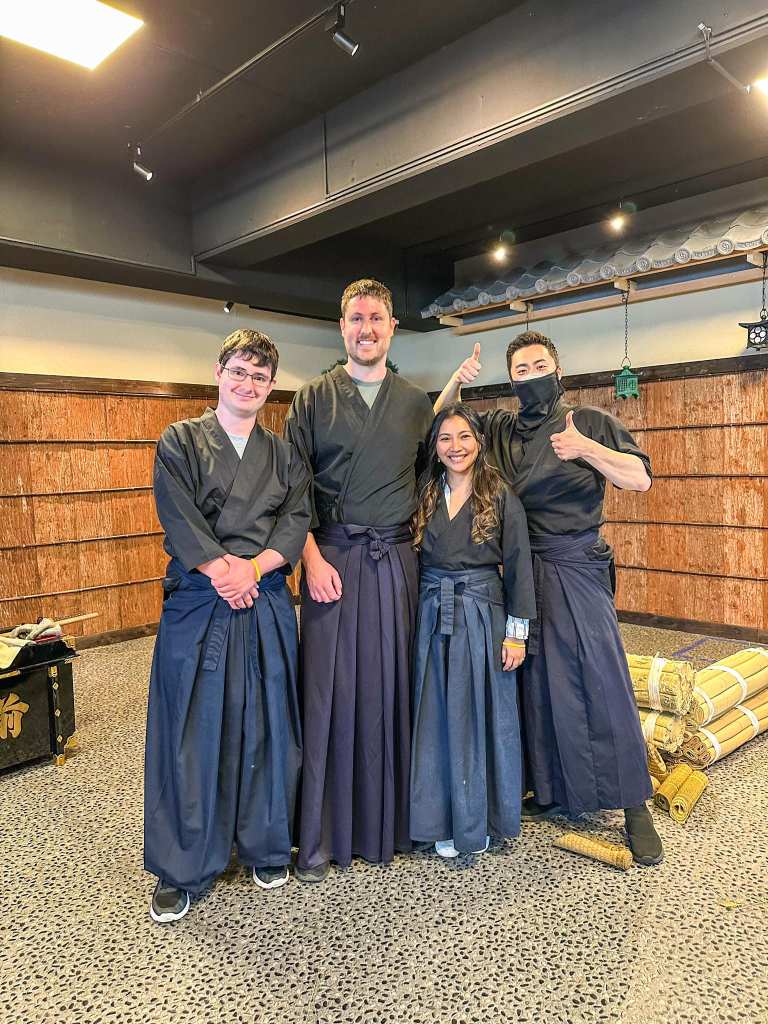
Shibuya & Harajuku
Two of Tokyo’s most energetic neighborhoods, easy to combine in one day. Shibuya has the famous scramble crossing, great shopping, and endless dining. Harajuku has Takeshita Street (quirky youth fashion, crepe shops) and the more upscale Omotesando boulevard.
- Marion Crepes in Harajuku — classic and worth the short queue
- Best for: shopping, people-watching, street food, pop culture
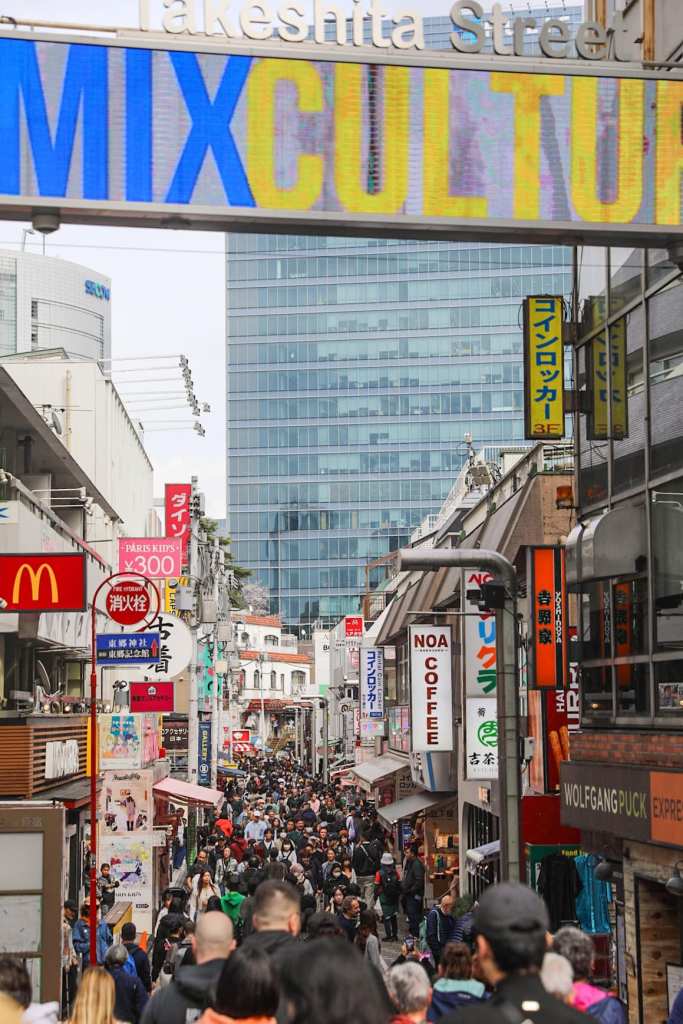

Shinjuku
Massive and multi-layered. Home to the world’s busiest train station, Omoide Yokocho (Memory Lane), Kabukicho, Golden Gai, and extensive retail at Lumine and other malls.
🍻 Omoide Yokocho — Manage Expectations: The atmosphere of this narrow, smoky alley of tiny yakitori bars is genuinely unique and photogenic. In practice: it gets very crowded, seating is extremely limited, and food quality is inconsistent. Treat it as a place to absorb the vibe and grab a quick skewer. If you want great yakitori in a less overwhelming setting, search Tabelog.
Akihabara
The mecca for gaming, anime, manga, and electronics. Multi-story arcade buildings, retro game shops, and Yodobashi Akiba (a massive multi-floor electronics/gaming store that’s also great for souvenir shopping). Even if you’re not a hardcore gamer, the neighborhood has a unique energy worth a couple of hours. If you’re into it, budget a full afternoon.
Edo-Tokyo Museum
My top museum recommendation in Tokyo, and I say that having also visited the Tokyo National Museum. The Edo-Tokyo Museum was recently renovated and is more engaging. It covers Tokyo’s transformation from Edo-era feudal city to modern metropolis through incredibly detailed miniatures, reconstructed full-scale structures, and interactive exhibits. Takes about 2 hours to go through.
- If you only have time for one museum: Edo-Tokyo Museum over Tokyo National Museum
- Tokyo National Museum has a broader scope but feels more traditional and less immersive
DAWN Avatar Robot Cafe
A genuinely unique experience. The cafe employs people with physical disabilities who operate small humanoid robots remotely from their homes. The robots take your order, serve your food, and have actual conversations with you. It’s more heartwarming than gimmicky, and the food was better than I expected. I had the beef curry which was pretty good. Need a Japanese curry recipe? Check out mine!

Tokyo Disney Parks
Both parks are worth visiting, but they each deserve a full separate day. If you only have one day for Disney, prioritize Tokyo DisneySea as it’s uniquely Japanese and unlike any Disney park in the world. Tokyo Disneyland is excellent but more similar to U.S. parks.
- Buy tickets online in advance — DisneySea frequently sells out
- Get there by Maihama Station (JR Keiyo Line), then the Disney Resort Line monorail
- If you only have 1 Disney day: DisneySea, no contest
Kyoto
Kyoto is ancient, refined, and designed for slowing down. After two trips to Japan, Kyoto was hands-down my favorite city of the whole itinerary. The streets are more beautiful, the food is excellent, the temples are everywhere, and the Park Hyatt Kyoto is genuinely one of the finest hotels I’ve ever stayed in.
We spent 4 nights here (April 16–20, 2026). Arriving from Tokyo via the Nozomi Shinkansen (2 hours 15 minutes, departing 1:00 PM, arriving 3:15 PM) is a smooth way to do it if you’re coming from there.
Getting Around Kyoto
- Kyoto’s train network is less comprehensive than Tokyo’s, but the buses are a good alternative. For getting between sights that aren’t within a 25-min. walking distance, we opted for Uber and taxis.
- If you’re staying in the Higashiyama district (which I’d recommend), many of the best sights are walkable: Ninenzaka, Sannenzaka, Kodai-ji Temple, and Gion are all easily accessible.
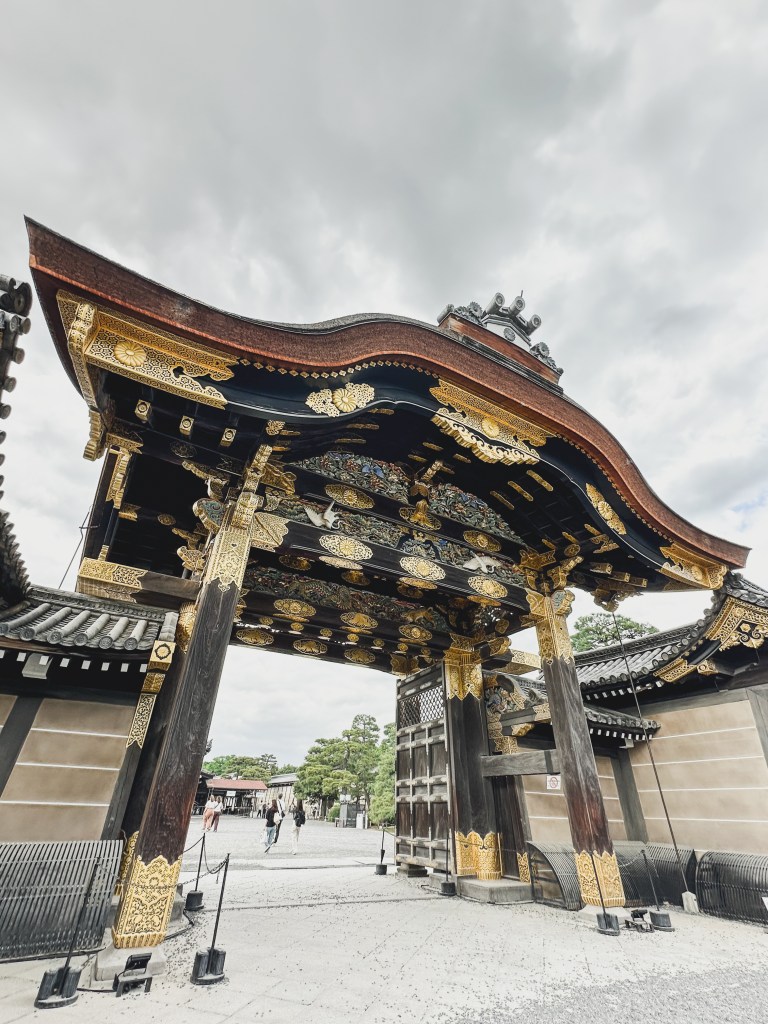
- For sights further out (Nijo Castle, Arashiyama, Fushimi Inari), you’ll need to Uber or take a bus.
Where We’ve Stayed
PARK HYATT KYOTO — THE STANDOUT OF THE TRIP
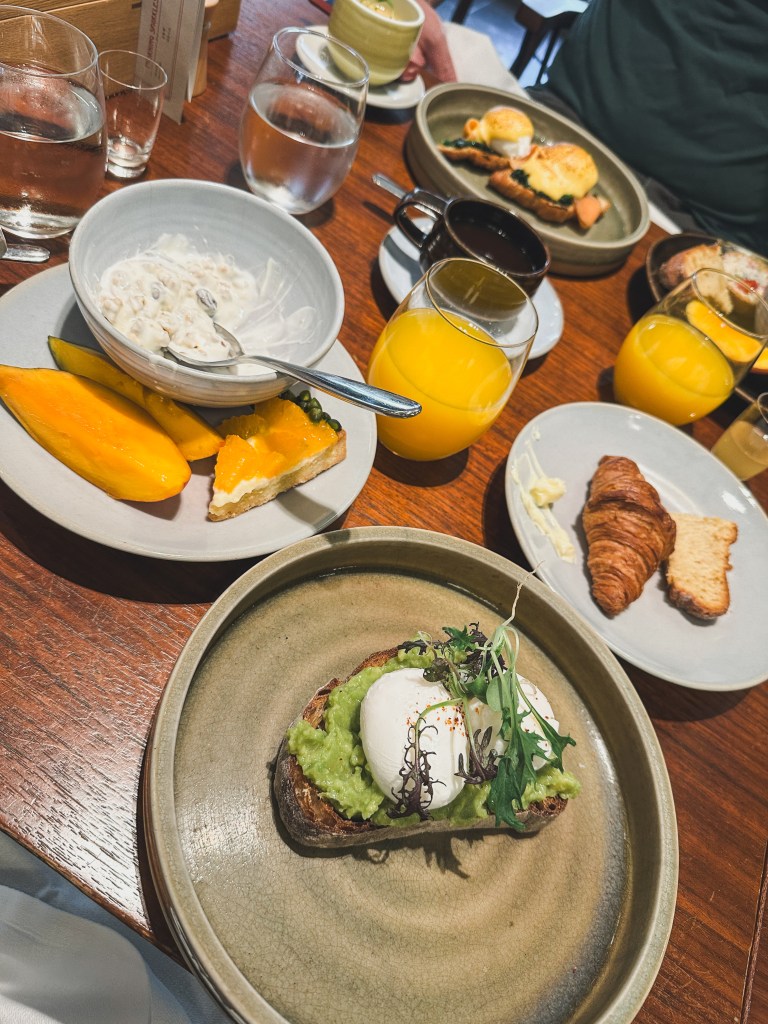
The service was exceptional. They learned what each day was for us — my birthday, our wedding anniversary, our babymoon — and brought a different fruit plate at breakfast for each occasion. I was sick most of the trip and they brought fresh ginger, lemon, and hot water to the room without being asked. The orange juice (yes, again) is incredible. Matcha latte is excellent. Booked at 45k points/night with a $75 Guest of Honor certificate; regular breakfast is ~$45 pp, so the cert paid for itself in two mornings. And as I’ve already mentioned, the May 2026 Hyatt devaluation will likely push this above 45k/night, and the property is right next to Ninenzaka, which is wildly convenient.
Restaurants + Food Spots
| Wagyu to Buta Sanjo Kawaramachi — AYCE Sukiyaki & Shabu-Shabu | RECOMMEND |
| The best AYCE hot pot experience of the entire trip, even edging out Nabezo in Tokyo. The atmosphere was relaxed (we were the only people there at lunch), beef quality is slightly higher, and all set options include both pork and beef. If pork isn’t your thing, you can easily redistribute within your group. Go at lunch for better pricing. A must-do for hot pot lovers. | |
| Gion Duck Noodles | MAYBE RECOMMEND |
| Charming spot in Gion with an emoji-only menu and only about 8–9 seats. The duck ramen is genuinely delicious. The catch: waits easily exceed an hour. For a 30-minute wait, I’d say the food earns its place. For an hour-plus wait in my experience, the payoff didn’t quite match the wait. Go early or be prepared to walk away if the line is long. | |
| Bar KOHAKU (Park Hyatt Kyoto) | WORTH VISITING |
| Intimate cocktail bar inside the Park Hyatt with a stunning view of Yasaka Pagoda at night. No seat charge for hotel guests. Good Japanese drinks menu: sake, whisky, gin cocktails, plus non-alcoholic options. Not a must-do, but a lovely way to spend an evening if you’re already staying there. | |
| Gion Coffee Nanafuku | WORTH VISITING |
| Small, well-regarded coffee shop with decent coffee and light sandwich options. Very limited seating (floor-level upstairs). Good for a quick morning stop. | |
| Mare (Hitsumabushi) | SKIPPABLE |
| Decent wagyu hitsumabushi but small portions for the price. If hitsumabushi is on your must-try list, Tabelog will surface better options. | |
| AMAM DACOTAN Kyoto | SKIP – DO NOT RECOMMEND |
| I was genuinely excited for this one (I love pastries and bake regularly), but it didn’t live up to the hype. The online queue system opens at 7:30 AM, wait can be 20–30 min, and some of the pastries tasted stale. The effort isn’t worth it for most travelers. | |



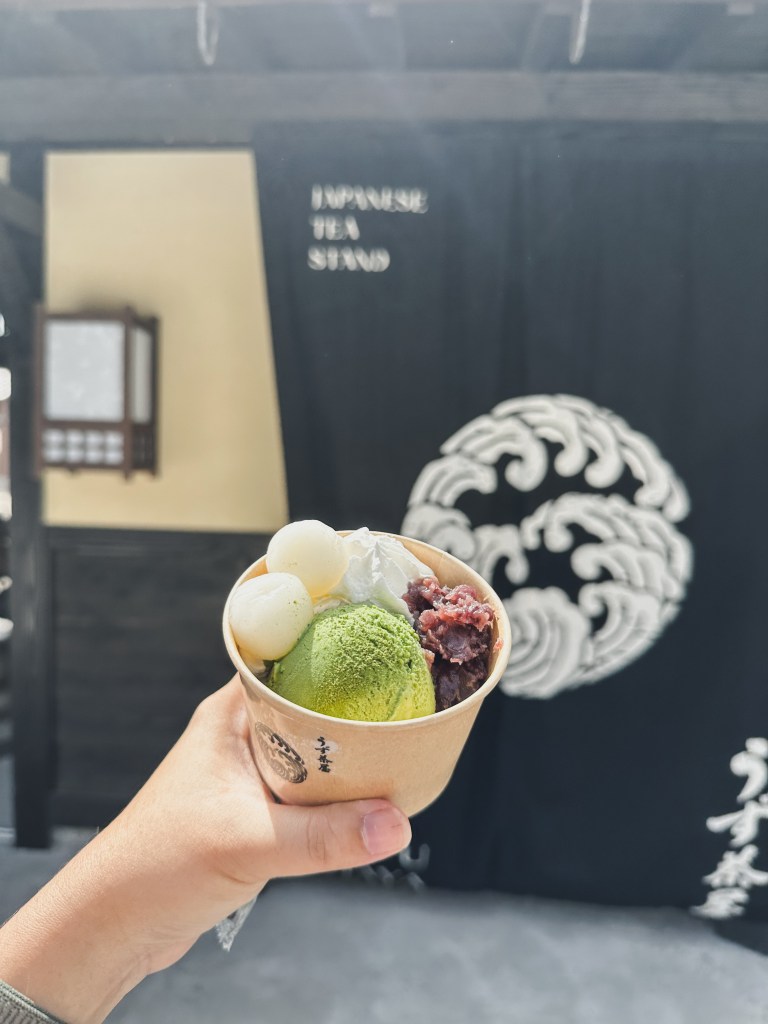
Places + Activities We Liked in Kyoto
Ninenzaka & Sannenzaka
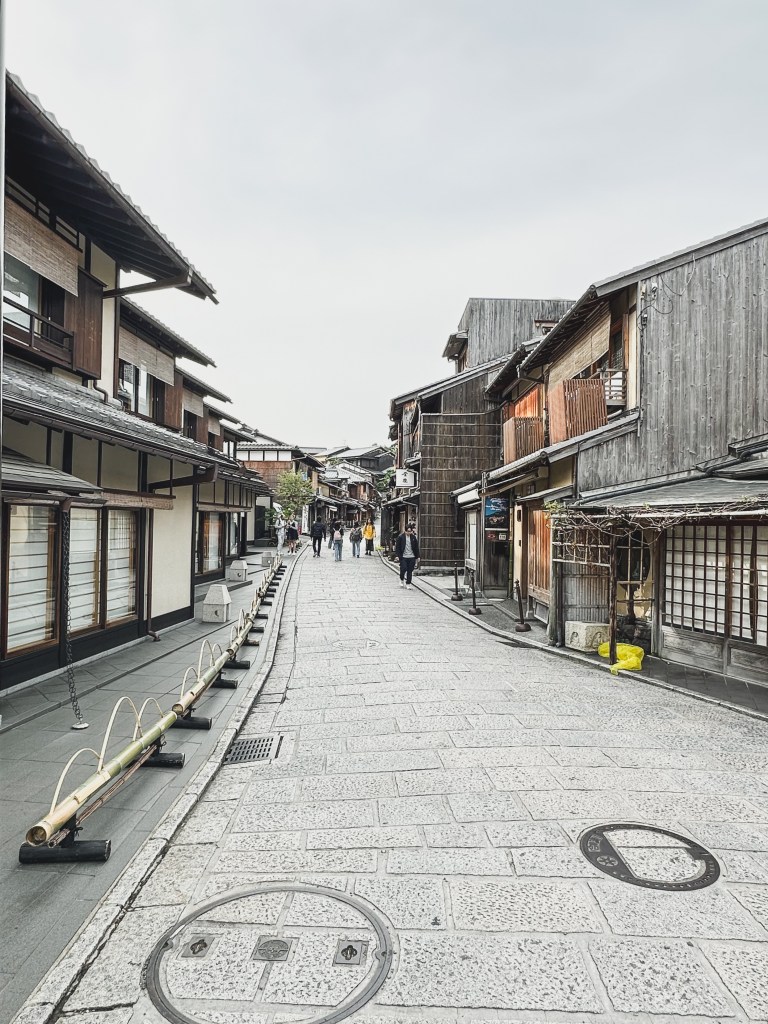
The cobblestone lanes running from Park Hyatt Kyoto toward Kiyomizudera Temple are among the most photographed streets in Japan. Traditional machiya townhouses, small shops, and tea houses line a gently sloping stone path. They get very crowded by mid-morning. If you’re staying nearby, an early morning walk here (before 8:00 AM) is one of Kyoto’s most memorable experiences.
- Best for: Photography, atmosphere, morning walks
- Walk upward toward Kiyomizudera Temple for a beautiful endpoint
Nishiki Market + Teramachi Shopping Street
“Kyoto’s Kitchen” is a narrow covered market with hundreds of stalls selling pickles, fresh tofu, street snacks, and traditional Kyoto foods. Teramachi runs alongside and transitions into shopping: ceramics, antiques, fashion, gifts. A great afternoon pairing after lunch. Gets congested by mid-afternoon; lunch hour is easier to navigate.
Kōdai-ji Temple + Bamboo Grove
A significantly less-crowded alternative to the famous Arashiyama Bamboo Grove. Kodai-ji sits just minutes from Park Hyatt Kyoto and offers serene gardens, beautiful temple architecture, and an atmospheric bamboo grove alongside the path. I ended up here because I was too sick to do my originally planned 5–6 hour Arashiyama tour (which would have included the monkey forest), but I’m glad I went. Worth it in its own right.
- Time needed: 1–1.5 hours
- Arashiyama is still on my list for a future trip; just can’t personally speak to it yet
HIRAI Knife Shop: Knife Sharpening Experience
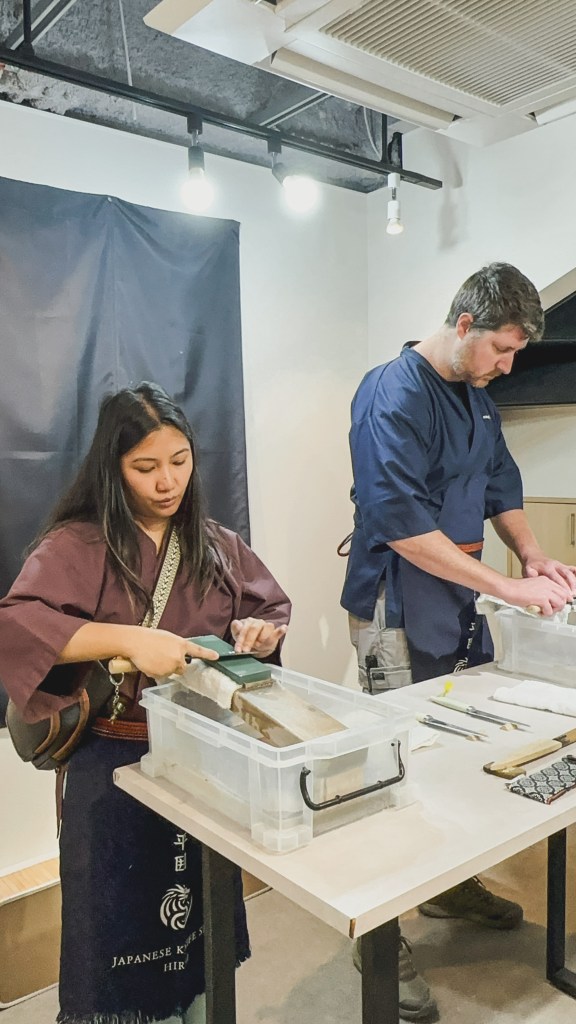
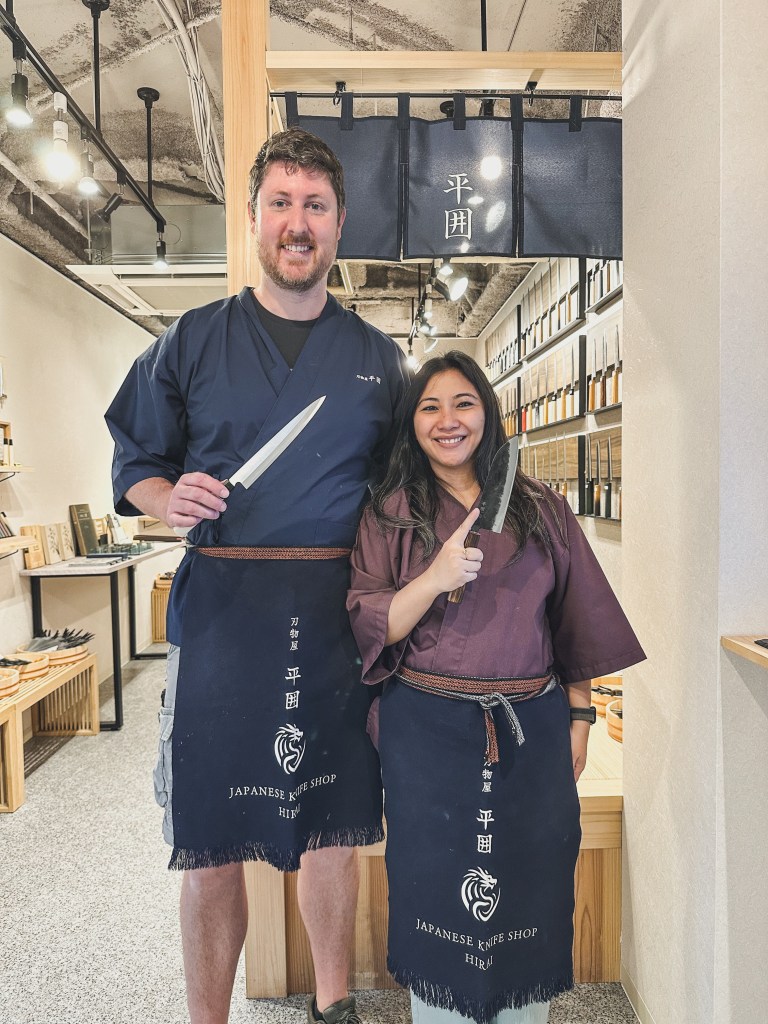
One of the most unique and memorable experiences available in Kyoto. HIRAI offers hands-on knife sharpening classes using traditional whetstones, plus a kitchen knife and handle of your choice from a curated selection. My husband is a knife enthusiast and I like to cook, so this was a great couple’s activity for us specifically. We ended up spending nearly $600 between the two of us (class, knives, and premium handles), but that reflects our enthusiasm. The base experience is more accessible than that.
Nijo Castle
A UNESCO World Heritage Site and former residence of the Tokugawa shoguns. Features the famous “nightingale floors” that squeak underfoot (designed to deter assassins), beautiful painted sliding screens, and traditional gardens. Worth the ~$16.50 admission if history is your thing. Time needed: 1.5–2 hours.
Potential Activity: Uzumasa Kyoto Village (Toei Kyoto Studio Park) – An open-air park built on an actual working film set used for samurai and period dramas. Reconstructed Edo-period streets, character shows, haunted house, ninja activities, escape rooms, and souvenir shopping. It was cute and I’m glad we checked it out, but I’d say it’s most suited for families with kids. Adults without children can still enjoy the atmosphere but it’s skippable if time is limited.
Osaka
Osaka is louder, more casual, and more food-obsessed than Kyoto. After four nights in the serene beauty of Higashiyama, arriving in Osaka feels like switching channels entirely. I only had about 2.5 days here (one of which was a full-day Hiroshima trip), so I can’t claim a fully informed take on the city. But what I did see confirmed its reputation as one of Japan’s great food cities.
One important heads-up: even when restaurants list a closing time, they often stop accepting new guests ~60 minutes before. On my birthday evening, after two escape rooms, I found out the hard way that two restaurants I had in mind were already “closed” at 9:45 PM despite having an 11:00 PM closing time posted. Plan dinner earlier than you think you need to, or make a reservation.

Where We Stayed
THE RITZ-CARLTON OSAKA — UNDERWHELMING AFTER THE PARK HYATTS
Honest take: a letdown after the Park Hyatts in Tokyo and Kyoto. The hotel is dated, service was a step below, and the breakfast buffet was extremely underwhelming. I booked it through Chase Sapphire Reserve’s “The Edit” program (free daily breakfast for two, room upgrade subject to availability, $100 credit) which made it a much better value, but I wouldn’t pay full price. If you’re traveling without those perks, look elsewhere.
Restaurants + Food Spots
| Yakiniku Meat Restaurant Esu | RECOMMEND |
| Excellent yakiniku after our Hiroshima day trip. Reservations are required and the menu is in Japanese only (Google Translate camera mode handles it fine). The meat quality is high and it was a perfect restorative meal after a long, emotionally heavy day. | |
| Dotonburi street food | MAYBE RECOMMEND |
| Osaka’s most famous entertainment strip. Extremely busy, lined with enormous neon signs, food stalls, and restaurants. This is a walking and snacking destination more than a sit-down dinner spot. Go here to absorb the energy, grab some takoyaki or kushikatsu, and watch the chaos. I’d visited on on evening after a late lunch and was too full to eat dinner here — timing your visit to arrive with appetite is the move. | |
| Three Broomsticks (USJ Wizarding World) | WORTH VISITING |
| Worth it for Harry Potter fans. Portions are great for the price, and pretty decent food. | |
| Sukiyaki Shabu-Shabu Kobe Beef Ishida | SKIP – DO NOT RECOMMEND |
| Only ended up here because two other restaurants stopped seating early. Food was fine, not AYCE, overpriced for what you got. The lesson: watch closing times and reserve dinner in advance in Osaka. | |
Places + Activities We Liked in Osaka
Escape Rooms — Studio Escapes
For escape room enthusiasts: Studio Escapes is an excellent find in Osaka and one of the very few escape room companies in Japan that offers experiences fully in English. The production value is high and both rooms I tried were well-designed. Need a free tracker? Try Escape Room Logbook!
🔑 If You Only Have Time for One Room: Shadow Zen – Shadow Zen was the standout. It’s atmospheric, clever, and beautifully themed around Japanese aesthetics. Highly recommended as the priority pick. For Queen & Country is also good but feels more conventional by comparison. Both rooms run ~$60/person. Reservations required so book online in advance. Budget 1.5 hours per room.
Universal Studios Japan
USJ is smaller than Universal Studios Hollywood or Florida. My honest take: it’s worth it mainly if you’re visiting with children (Nintendo World is impressive) or if you’re a serious roller coaster enthusiast.
🎢 The Flying DinosaurIf you ride coasters, this is the one. It’s a flying coaster (suspended face-down) and is widely considered one of the most intense flying coasters in the world. My husband has ridden major coasters globally and confirmed it’s the most intense he’s been on. Prioritize it first thing in the day before queues build.
- Buy the Express Pass in advance (~$93). It dramatically reduces wait times and is effectively necessary during busy seasons.
- Harry Potter World has exceptional theming. Three Broomsticks serves a solid lunch and the butterbeer is worth trying.
- For adults without kids who don’t ride coasters: USJ is probably skippable.
Hiroshima Day Trip
Hiroshima is about 80 minutes from Osaka (or about 2 hours from Kyoto) by Shinkansen, and a day trip covering the Peace Memorial sites and Miyajima Island is one of the most emotionally significant and genuinely unforgettable experiences on any Japan itinerary. I’m not a history buff by nature, but this day hit me harder than I expected.
It’s not a light day; the Peace Memorial Museum is graphic and sobering. But it’s exactly the kind of experience that puts the rest of a trip into perspective. If you have a free day and are based in Osaka or Kyoto, I’d strongly encourage making the trip.
We did a guided bus tour (~8 hours total). A guided bus tour is the most efficient and best-value approach for a day trip from Osaka or Kyoto. It handles all logistics, and provides English commentary. We booked ours months in advance and it came to ~$470 for a group of 3. Here’s what it included:
- Hiroshima Peace Memorial Park: expansive, serene, lined with monuments. The scale of what was built here to honor the victims is genuinely moving.
- Atomic Bomb Dome: the skeletal ruin preserved exactly as it stood on August 6, 1945. Standing in front of it is something else.
- Peace Memorial Museum: the emotional centerpiece of the day. Documents the bombing and its aftermath with unflinching honesty. Give yourself 2–2.5 hours.
- Lunch: Hiroshima-style okonomiyaki: a layered savory pancake, distinct from Osaka-style.
- Miyajima Island: vThe iconic floating torii gate of Itsukushima Shrine is stunning. Free-roaming deer wander the island. Try the momiji manju (maple leaf-shaped sweet pastries) and fresh oysters if you eat seafood.

Overall, a pretty great trip (both times!). And while we won’t be traveling internationally again for a while due to the baby, I will always find an excuse to keep coming back to Japan.